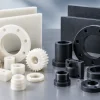
In high-purity chemical processing, semiconductor manufacturing, and pharmaceutical fluid systems, visual clarity and material integrity are paramount. While virgin PTFE (Polytetrafluoroethylene) is universally recognized for its unmatched chemical inertness, ultra-low coefficient of friction, and wide temperature resilience, its standard translucent-white appearance presents operational challenges in complex multi-line environments.
To eliminate operational ambiguity and enhance plant safety, engineers are increasingly turning to colored PTFE custom shapes. By integrating stable organic or inorganic pigments during raw resin processing, colored PTFE delivers full mechanical and chemical functionality while providing unambiguous color coding across critical process lines.
The Critical Role of Color Coding in Industrial Processing
Modern process plants often handle dozens of volatile solvents, acids, deionized water streams, and high-pressure gases through tightly spaced manifolds. Relying solely on external tags or pipe labels increases human-error risks during maintenance overhauls. Custom engineered modified materials like colored PTFE resolve these safety bottlenecks directly at the component level.
- Fluid Line Identification: Color-coded seals, valve seats, and fittings allow operators to instantly distinguish between hazardous acid streams (e.g., red/yellow) and neutral wash fluids (e.g., blue).
- Cross-Contamination Prevention: Dedicated colored PTFE gaskets assigned to specific process loops prevent accidental interchange during routine maintenance cleanouts.
- Preventive Maintenance Tracing: Distinct color codes can indicate specific maintenance intervals or material hardness formulations, simplifying inventory auditing and replacement protocols.
Technical Properties: Virgin PTFE vs. Pigmented/Filled PTFE Grades
A common concern among process engineers is whether color additives compromise PTFE’s chemical or mechanical limits. When processed under precise sintering parameters, high-grade color toners maintain excellent thermal stability without causing outgassing or leaching.
The table below highlights technical specifications and performance comparisons across standard virgin, pigmented, and reinforced PTFE variants:
| Property / Metric | Virgin PTFE (Unfilled) | Colored / Pigmented PTFE | Carbon/Graphite Filled PTFE |
|---|---|---|---|
| Primary Visual Identifier | Natural White | Blue, Red, Black, Green, Yellow | Dark Gray / Black |
| Chemical Resistance | Universal (pH 0–14) | Universal (pH 0–14, pigment matched) | High (Slight reactive media constraints) |
| Continuous Temp Rating (°C / °F) | -200°C to +260°C (-328°F to +500°F) | -200°C to +260°C (-328°F to +500°F) | -200°C to +260°C (-328°F to +500°F) |
| Electrical Insulation | Excellent (Dielectric) | Excellent (Non-conductive pigments) | Antistatic / Conductive |
| Wear & Wear Rate Resistance | Standard | Standard to Moderate | Significantly Improved |
| Main Application Focus | General chemical seals & labware | Color-coded fluid lines & safety seals | High-load dynamic mechanical wear |
Precision Custom Machining for Non-Standard Applications
Every chemical processing line features unique dimensions, pressure ratings, and flange configurations. Stock rods and sheets rarely satisfy custom equipment requirements. At CYLEX, we supply precision CNC-machined custom shapes—including custom colored PTFE seals, bushings, valve bodies, and wear rings—machined strictly to customer prints.
Whether your application demands FDA-compliant food grade pigments for hygienic processing or high-visibility blue seals for ultra-pure chemical manifolds, our engineering team ensures tight tolerances, clean surface finishes, and zero batch-to-batch color drift.
Frequently Asked Questions (FAQ)
1. Do color additives leach into high-purity chemicals or process fluids?
No. Industrial-grade colored PTFE uses fully encapsulated, non-reactive pigments or inert ceramic compounds that are co-sintered into the PTFE matrix. Under recommended operating temperatures and chemical conditions, the pigments will not leach, bleed, or contaminate process media.
2. Can colored PTFE custom shapes be machined to tight tolerances?
Yes. Colored PTFE retains the exact machinability characteristics of unfilled PTFE. Using state-of-the-art CNC turning and milling techniques, custom shapes can achieve high precision tolerances for critical sealing faces and valve components.
3. Are custom colors available for specific company safety standards?
Absolutely. While standard industrial colors include Blue, Black, Green, Red, and Yellow, custom color matching can be executed based on project volume and specific plant safety identification codes.
4. How do I request a quote for custom-machined colored PTFE parts?
Because CYLEX specializes in custom B2B engineering supply, quotes are tailored to your technical requirements. Simply send your CAD files, technical drawings, material specifications, and batch quantities directly through our team.
Upgrade Your Industrial Safety Infrastructure with CYLEX
Enhance operational clarity, safeguard fluid lines, and maintain high performance across your processing facilities. Visit our Colored PTFE Product Line to review material options, or Contact CYLEX Engineering Sales today to request a custom RFQ for your technical drawings.