


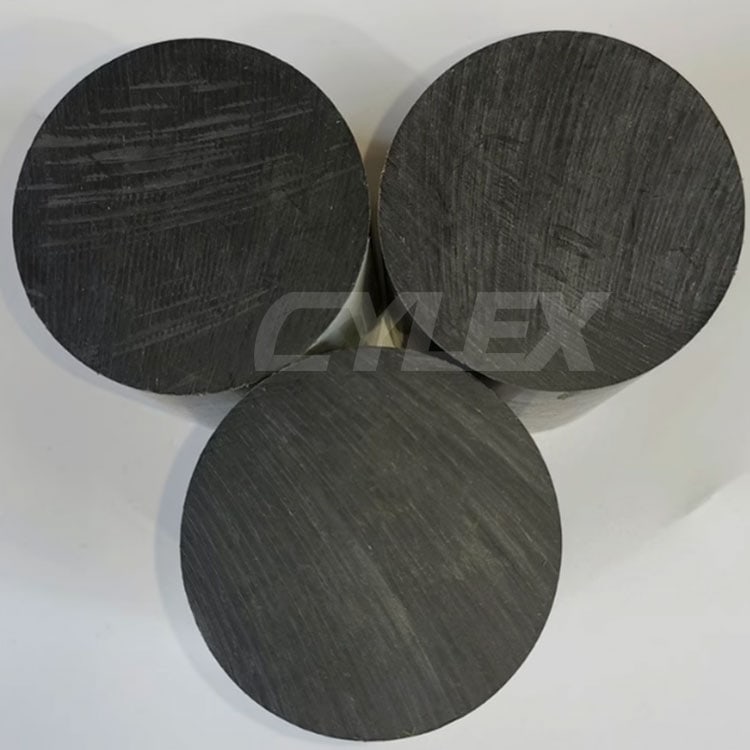
In modern materials science, conductive PA6 nylon, as an innovative high-performance material, is gradually receiving widespread attention and application. This material not only inherits the original excellent properties of PA6 nylon such as high strength, wear resistance, heat resistance and chemical corrosion resistance, but also gives it excellent conductive properties by adding conductive fillers such as carbon fiber, carbon black or metal powder. So, how does conductive PA6 nylon achieve conductivity? This article will explore its conductive mechanism in depth.
Basic properties of PA6 nylon
PA6 nylon, also known as polyamide 6, is a thermoplastic with excellent physical and chemical properties. It has good mechanical strength, wear resistance, heat resistance and chemical corrosion resistance, and is an ideal material for manufacturing various mechanical parts, automotive parts and electrical parts. However, the original PA6 nylon does not have conductivity, which limits it in applications that require conductive properties.
Introduction of conductive fillers
In order to give PA6 nylon conductive properties, researchers achieve this by adding conductive fillers. These fillers can be carbon fibers, carbon black, metal powders or conductive polymers. These fillers form a conductive network in the PA6 nylon matrix, allowing current to flow in the material.
Carbon fiber is a material with excellent conductive properties, and its addition can significantly improve the conductivity of PA6 nylon. Carbon fiber forms a continuous conductive path in the PA6 nylon matrix, allowing current to flow smoothly in the material. At the same time, the addition of carbon fiber can also improve the mechanical strength and heat resistance of the material.
Carbon black is a commonly used conductive filler that can form conductive chains in the PA6 nylon matrix, thereby giving the material conductive properties. The conductive properties of carbon black are related to its particle size, shape and distribution. The conductive properties of PA6 nylon can be further improved by optimizing the addition amount and dispersion of carbon black.
Metal powder is also an effective conductive filler that can form a metal network in the PA6 nylon matrix to achieve conductivity. However, the addition of metal powder may increase the density and cost of the material, and also affect the processing performance and mechanical properties of the material.
Construction of conductive network
The conductive properties of conductive PA6 nylon mainly depend on the dispersion and arrangement of the conductive filler in the matrix. The conductive properties of the material are best when the conductive filler is evenly dispersed in the matrix and forms a continuous conductive path. To achieve this goal, researchers usually use methods such as melt blending, solution blending or in-situ polymerization to prepare conductive PA6 nylon.
During the melt blending process, the conductive filler and PA6 nylon particles are mixed evenly under the action of heating and shear force. As the temperature increases and the shear force increases, the dispersion of the conductive filler in the matrix gradually increases, forming a continuous conductive path.
Solution blending is to dissolve the conductive filler and PA6 nylon in a common solvent, and then prepare the conductive PA6 nylon by evaporating the solvent. This method can achieve uniform dispersion of the conductive filler in the matrix, but it requires the use of toxic solvents and the preparation process is more complicated.
In-situ polymerization is a more advanced method that prepares conductive PA6 nylon by adding conductive fillers during the polymerization process of PA6 nylon. This method can achieve nano-scale dispersion of conductive fillers in the matrix, thereby significantly improving the conductive properties of the material.
Optimization of Conductive Properties
The conductive properties of conductive PA6 nylon can be optimized by adjusting the type, amount and dispersibility of conductive fillers. In addition, the conductive properties of the material can be improved by changing the processing conditions, post-treatment process and surface modification of the material.
For example, by increasing the amount of conductive filler added, the conductive properties of the material can be significantly improved. However, too much conductive filler may lead to a decrease in the mechanical properties and processing performance of the material. Therefore, it is necessary to reasonably control the amount of conductive filler added while ensuring the conductive properties.
In addition, the conductive properties of the material can also be improved by optimizing the dispersibility of the conductive filler in the matrix. This can be achieved by improving the preparation process, adding dispersants or using ultrasonic dispersion.
Conclusion
As an innovative high-performance material, conductive PA6 nylon has broad application prospects in the fields of electronics, electrical, automotive and chemical industries. Its conductive mechanism is mainly achieved by introducing conductive fillers and forming a conductive network in the matrix. By optimizing the type, amount and dispersibility of conductive fillers, the conductive properties of the material can be further improved. In the future, with the continuous development of material science and preparation technology, the application field of conductive PA6 nylon will be more extensive.
To purchase or inquire about related products, please contact us immediately: info@cylexplastics.com