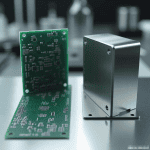
In modern manufacturing and electronics industries, material selection plays a crucial role in product performance and cost-effectiveness. Two commonly compared materials are FR4, a composite material widely used in PCBs, and traditional metal machining parts. This article provides a detailed comparison of their properties, advantages, and disadvantages to help you make informed material decisions.
What is FR4?
FR4 is a flame-retardant glass-reinforced epoxy laminate material. It’s the most common substrate for printed circuit boards (PCBs) and finds applications in various electrical and electronic components.
Advantages of FR4:
- Excellent electrical insulation: High dielectric strength makes it ideal for PCBs
- Lightweight: Significantly lighter than most metals
- Cost-effective: Generally cheaper than metal machining for electronic applications
- Corrosion resistant: Doesn’t rust or oxidize like metals
- Thermal stability: Good performance across a range of temperatures
- Ease of fabrication: Can be easily drilled, cut, and etched for PCB production
Disadvantages of FR4:
- Lower mechanical strength: Not suitable for high-stress structural applications
- Limited thermal conductivity: Poor heat dissipation compared to metals
- Temperature limitations: Decomposes at high temperatures (typically above 130°C)
- Moisture absorption: Can absorb small amounts of moisture affecting performance
Metal Machining Parts
Metal parts are manufactured through various machining processes (milling, turning, drilling) from materials like aluminum, steel, brass, and copper.
Advantages of Metal Parts:
- Superior strength: Excellent for structural and load-bearing applications
- High thermal conductivity: Ideal for heat sinks and thermal management
- Temperature resistance: Can withstand much higher temperatures than FR4
- Durability: Resistant to wear and tear in harsh environments
- EMI shielding: Metals naturally provide electromagnetic interference protection
- Precision machining: Can achieve extremely tight tolerances
Disadvantages of Metal Parts:
- Higher cost: Material and machining costs are typically higher
- Heavier weight: Not ideal for weight-sensitive applications
- Corrosion potential: Many metals require protective coatings
- Electrical conductivity: Requires insulation for electrical applications
- Longer lead times: Machining processes often take more time than FR4 fabrication
Key Comparison Factors
| Property | FR4 | Metal Parts |
|---|---|---|
| Weight | Light | Heavy |
| Cost | Lower | Higher |
| Thermal Conductivity | Low (0.25 W/mK) | High (50-400 W/mK) |
| Electrical Insulation | Excellent | Poor (conductive) |
| Maximum Temperature | 130°C | 500°C+ (varies by metal) |
Application Considerations
Choose FR4 when:
- Electrical insulation is required
- Weight is a critical factor
- Budget constraints exist
- Moderate temperature operation is expected
- PCB or electronic applications are needed
Choose metal machining parts when:
- High mechanical strength is required
- Excellent heat dissipation is needed
- Operation in high-temperature environments
- EMI shielding is necessary
- Precision mechanical components are required
Conclusion
The choice between FR4 and metal machining parts depends entirely on your specific application requirements. FR4 excels in electrical applications where insulation and lightweight properties are crucial, while metals dominate in mechanical, thermal, and structural applications. Many modern products actually combine both materials strategically to leverage their respective advantages. Understanding these material properties will help you make better design and manufacturing decisions for your projects.