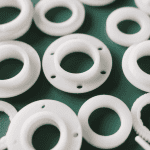
Polytetrafluoroethylene (PTFE) seals require precise secondary processing to meet strict industry standards. Proper deburring and surface treatment significantly impact the performance and longevity of these critical components. In this guide, we’ll explore professional techniques for achieving perfect finishes on PTFE seals.
Understanding PTFE Material Characteristics
Before diving into processing techniques, it’s essential to understand PTFE’s unique properties:
- Low coefficient of friction
- Excellent chemical resistance
- High temperature tolerance
- Non-stick surface properties
- Relatively soft material (Shore D 50-65)
These characteristics make PTFE both wonderful for seal applications and challenging to machine and finish properly.
Deburring Techniques for PTFE Seals
1. Manual Deburring Methods
For small production runs or delicate parts:
- Use sharp, high-quality razor blades for clean cuts
- Fine-grit sandpaper (400-600 grit) for smoothing edges
- PTFE-specific deburring tools with rounded edges
2. Mechanical Deburring Options
For higher volume production:
- Tumbling with medium-density media
- Cryogenic deflashing for complex geometries
- Vibratory finishing with specialized compounds
Pro Tip: Always deburr at room temperature – PTFE becomes more difficult to work with when cold.
Surface Treatment Methods for PTFE Seals
1. Plasma Treatment
Creates a microscopically rough surface that improves bonding and wettability:
- Increases surface energy from 18 dynes/cm to 50+ dynes/cm
- Effects last approximately 30 days
- Requires specialized equipment
2. Sodium Etching
A chemical process that modifies the surface layer:
- Creates permanent surface modification
- Requires proper safety precautions
- Best for critical applications
3. Laser Surface Treatment
Emerging technology offering precise control:
- No chemicals required
- Computer-controlled precision
- Can create specific surface patterns
Quality Control in PTFE Seal Finishing
Implement these QC measures:
- Visual inspection under 10x magnification
- Surface energy testing (dyne pens)
- Dimensional verification
- Sample destructive testing
Common Challenges and Solutions
| Challenge | Solution |
|---|---|
| Fuzz formation | Use sharper tools, lower feed rates |
| Surface contamination | Clean with isopropyl alcohol before treatment |
| Inconsistent treatment | Standardize process parameters |
Best Practices for PTFE Seal Secondary Processing
- Maintain clean processing environment
- Use dedicated tools for PTFE only
- Implement proper handling procedures
- Document all process parameters
- Train operators on PTFE-specific techniques
Proper secondary processing transforms good PTFE seals into exceptional components. By implementing these deburring and surface treatment techniques, manufacturers can significantly improve product performance and reliability.
Mastering PTFE seal secondary processing requires understanding both the material science and practical techniques. The extra effort in proper deburring and surface treatment pays dividends in product quality and customer satisfaction.